
Residential EPCs Yorkshire
Looking to sell you home or rent? You'll need a Energy Performance Certificate
- Fast booking across Yorkshire
- Qualified assessors & engineers
- Certificates delivered digitially
What is a Residential EPC?
A Residential Energy Performance Certificate (EPC) is an official document that assesses the energy efficiency of a home, rating it on a scale from A (most efficient) to G (least efficient). It is a legal requirement in the UK whenever a property is built, sold, or rented, ensuring that prospective buyers or tenants have clear, standardised information about the property’s energy performance before making a decision.
The EPC provides an overview of the home’s estimated energy usage, typical running costs, and carbon emissions, helping occupiers understand how efficient the property is to live in. It also includes a list of recommended improvements—such as upgrading insulation, installing more efficient heating systems, or improving glazing—that can enhance energy performance over time.
For homeowners and landlords, a good EPC rating can make a property more attractive on the market, potentially increasing its value or rental appeal. It can also highlight opportunities to reduce energy bills and environmental impact, making it a useful tool for both compliance and long-term cost savings.
When is a Commercial EPC required?
A Residential EPC is required whenever a property is built, sold, or rented in the UK. This means homeowners must have a valid certificate in place before marketing their property for sale, and landlords must obtain one prior to letting to tenants. The EPC should be available to prospective buyers or tenants at the earliest stage, typically when the property is first advertised. It is also required for newly constructed homes once building work has been completed. With a validity period of 10 years, an EPC must be renewed if the property is to be sold or re-let after expiry, and landlords must also ensure the property meets minimum energy efficiency standards before it can be legally rented.
At Infinity Homes Yorkshire, our qualified assessors and engineers provide a professional and efficient EPC service, ensuring full compliance with current regulations. Following the assessment, your EPC is produced using accredited software and can be delivered to you digitally, allowing for a quick turnaround and easy access to your certification when you need it.
MEES UPDATE:
Proposed higher minimum EPC ratings (commercial rentals)
Under the current Minimum Energy Efficiency Standards (MEES), all non-domestic rented properties must achieve a minimum EPC rating of E, unless a valid exemption has been registered. This requirement applies to landlords across the commercial property sector and must be met before a property can be legally let.
Looking ahead, proposed changes outlined in government consultation documents suggest a tightening of these standards. From 1 April 2027, properties may be required to meet a minimum EPC rating of C, followed by a further increase to a B rating from 1 April 2030. Where these standards cannot be met, a valid exemption would need to be registered to remain compliant.
These are proposals set out in consultation documents and may change — we’ll advise the latest position when you enquire.
Why do I need a qualified Residential EPC Assessor?
A valid Residential EPC can only be issued by an accredited Domestic Energy Assessor (DEA) using government-approved software, making it important to appoint a suitably qualified professional. For homeowners, landlords, and property sellers, working with an experienced assessor ensures that the certificate is accurate, compliant, and reflective of the property’s true energy performance.
In addition to producing the EPC, a qualified assessor will carry out a thorough review of the home’s energy use and carbon emissions. This helps identify how efficiently the property is running and highlights practical ways to reduce energy consumption, lower household bills, and improve overall comfort.
An experienced residential EPC assessor will also have a strong understanding of current regulations and energy efficiency measures. This means they can not only provide an accurate rating, but also offer clear, practical advice on improvements that can enhance the property’s performance and appeal.
What the assessment involves
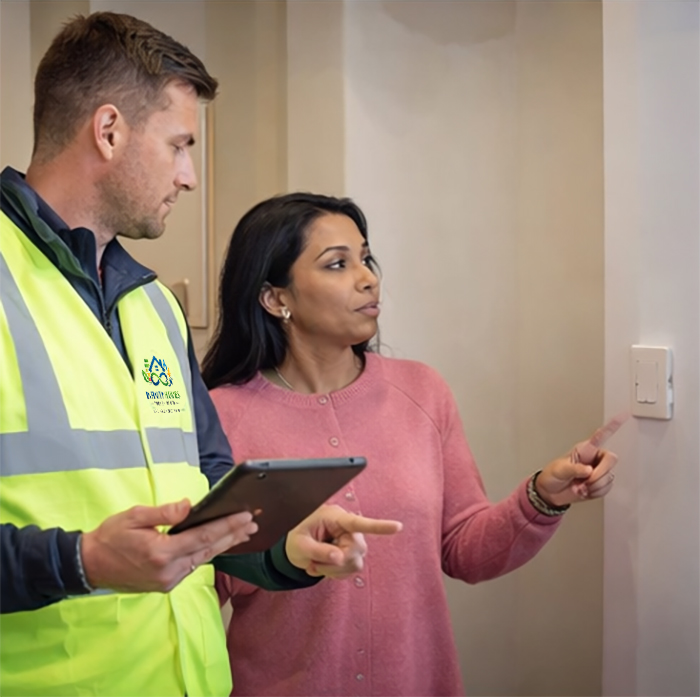
A residential EPC assessment involves a detailed review of a building’s key energy-related systems and overall construction. The assessor evaluates how energy is used throughout the property, focusing on areas that impact efficiency, performance, and running costs.
The following elements are typically considered as part of the assessment:
- Renewable technologies – presence of solar panels or other low-carbon energy sources
- Lighting systems – type, efficiency, and controls (e.g. LED, occupancy sensors)
- Heating systems – boilers, heat pumps, radiators, and overall efficiency
- Building fabric – walls, roof, floors, insulation levels, and thermal performance
- Cooling and ventilation – air conditioning systems, airflow, and mechanical ventilation
- Air tightness – how well the building retains heat and prevents drafts
- Zoning – how the building is divided into different areas for heating and cooling control
- Controls – thermostats, timers, and building management systems (BMS)
- Glazing – window type, glazing specification, and heat retention
- Hot water systems – efficiency and method of water heating
HOW IT WORKS
- Request Quote / Book
- We Visit and Access / Test
- Certificate is Sent to You
Commercial EPC FAQs
The main purpose is to inform owners, buyers, and tenants about the energy efficiency of a property and ways to improve it.
It mainly considers energy used for heating, hot water, lighting, and insulation performance of the building.
An EPC includes:
The current energy efficiency rating
The potential rating if improvements are made
Estimated energy costs
Recommendations for improving energy efficiency
A rental property must normally have a minimum rating of E to be legally let.
An EPC is valid for 10 years from the date it is issued.
It all depends on our current workload and your location, the best thing to do is get in touch ASAP with your details.
Improve insulation in walls and roofs to reduce heat loss
Upgrade to energy-efficient lighting (e.g. LED systems)
Install high-performance double glazing to improve thermal efficiency
Replace or upgrade heating systems for better energy use
Consider switching from gas boilers to electric heat pumps for significantly higher efficiency
Residential EPC's QUOTE
Fill in the form below and we will get in touch to arrange a visit for your Yorkshire residential EPC.
WHY CHOOSE US?
An EPC is legally required in the UK when selling, renting out, or constructing a home.
You need a Non-Domestic EPC in order to build, sell or let a non-domestic property.
Ensures gas appliances & electrics are safe and do not pose risks.
Plan the right energy-efficiency improvements for your home with a whole-house assessment.